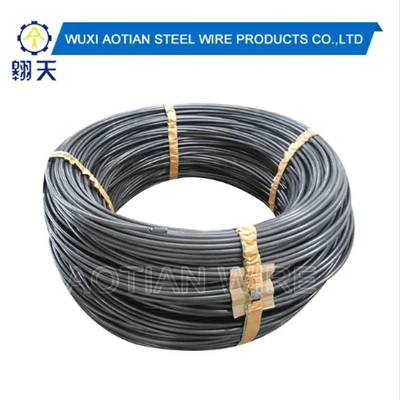
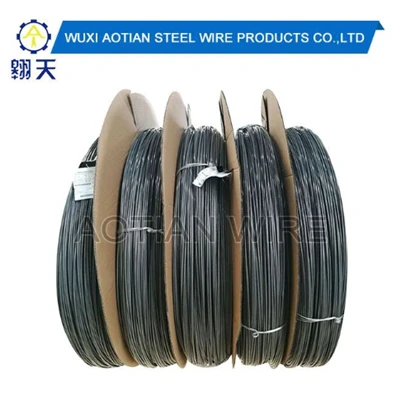
Nilai baja batang kawat baja pos dingin dan batang kawat umumnya karbon rendah, karbon sedang, baja struktural karbon berkualitas tinggi dan baja paduan rendah. Kacang anti-kendor berasal dari luar negeri. Ini secara permanen melekat pada ulir dengan plastik rekayasa khusus, sehingga ulir dalam dan luar terjepit selama proses pengencangan, dan plastik rekayasa diperas untuk menghasilkan gaya reaksi yang kuat, yang sangat meningkatkan jarak antara ulir dalam dan luar. . Gesekan, yang memberikan ketahanan mutlak terhadap getaran. Kedalaman terpendam baut jangkar dan pengait semuanya untuk menjamin gesekan antara baut dan pondasi, agar tidak menyebabkan baut tercabut dan rusak. Baut jangkar memiliki fungsi memperbaiki peralatan tanpa getaran dan benturan yang kuat. Baja pos dingin karbon rendah terutama digunakan untuk mur pos dingin. Bahan utama baut dan mur adalah baja karbon sedang (ML35 dan SWRCH35K), yang dipadamkan dan ditempa hingga tingkat 8 atau lebih tinggi.
Fasteners can be made of steel, non-ferrous metals, stainless steel, titanium alloys or other engineering materials, and their processing methods can be hot working or cutting, but more than 90 percent of fasteners are pressed by cold heading agents. The products produced by this process have high precision, good quality and high production efficiency. China's fastener industry has maintained steady double-digit growth for three consecutive years. Although the application ratio of non-ferrous metals and composite materials is increasing year by year, the role of steel in high-strength fasteners is irreplaceable.
Cold heading is plastically formed from metal at room temperature. There are generally two kinds of nuts, one is iron, that is, carbon steel. One is stainless steel, and of course there are copper and aluminum nuts, but these are rarely used. Copper is more or less useful, and nuts like aluminum are rarely used. There are two grades of hexagonal nuts, one is grade 4.8, ordinary nuts, and the other is grade 8 nuts. For more industry knowledge about nuts, you can read the nut specification table and the national standard specification table of the nut industry. Knowledge of these nut specification sheets and industry standards. Allows us to have a deeper understanding of the nut. Cold heading performance is one of the important properties of cold heading steel. Its performance is mainly reflected in its good cold forming performance. For deformation, it should have as little resistance as possible and high deformation capacity. Due to its good cold forming properties, cold heading steel is used in the machining industry to replace hot rolling cutting machines for cold drawing. The advantage of this process is that while saving a lot of man-hours, metal consumption can be reduced by 10 percent to 30 percent . It is in line with the large-scale production of clean production and resource-saving enterprises, and the product has high dimensional accuracy, good surface finish and high production efficiency, which is the focus of promoting advanced processing technology. Therefore, using the cold heading process to produce fasteners not only has high efficiency and good quality, but also has low material consumption and low cost. Baosteel, Maanshan Iron and Steel, Xingshan Iron and Steel, Hunan Iron and Steel, Hangzhou Iron and Steel and other steel mills have established cooperative relations with the fastener industry, forming my country's cold heading wire rod industry group. Products include low carbon, ultra low carbon, medium carbon (quenched and tempered), low alloy steel and case hardened steel, ranging from 5.5 mm to 42 mm, covering almost all requirements for fastener steels. Although the development of domestic cold heading steel wire rod and wire rod started late, it developed rapidly, especially after the mid-1980s, high-speed wire rod production lines and wire rod continuous rolling production lines were put into operation one after another. It provides equipment guarantee for the production of cold heading steel wire rod and wire rod. At the end of 2005, the production capacity of cold heading steel wire reached 6 million tons/year (about 10 percent to 12 percent of the total wire rod).